
5 Precious Tips for Luxury Car Tyre Maintenance in Abu Dhabi
Luxury cars are built for comfort, speed, and smooth handling, but their tyres need proper care to deliver that performance. Abu Dhabi's high temperatures, hot roads, dust, and long drives can put extra stress on tyres, making regular checks important.
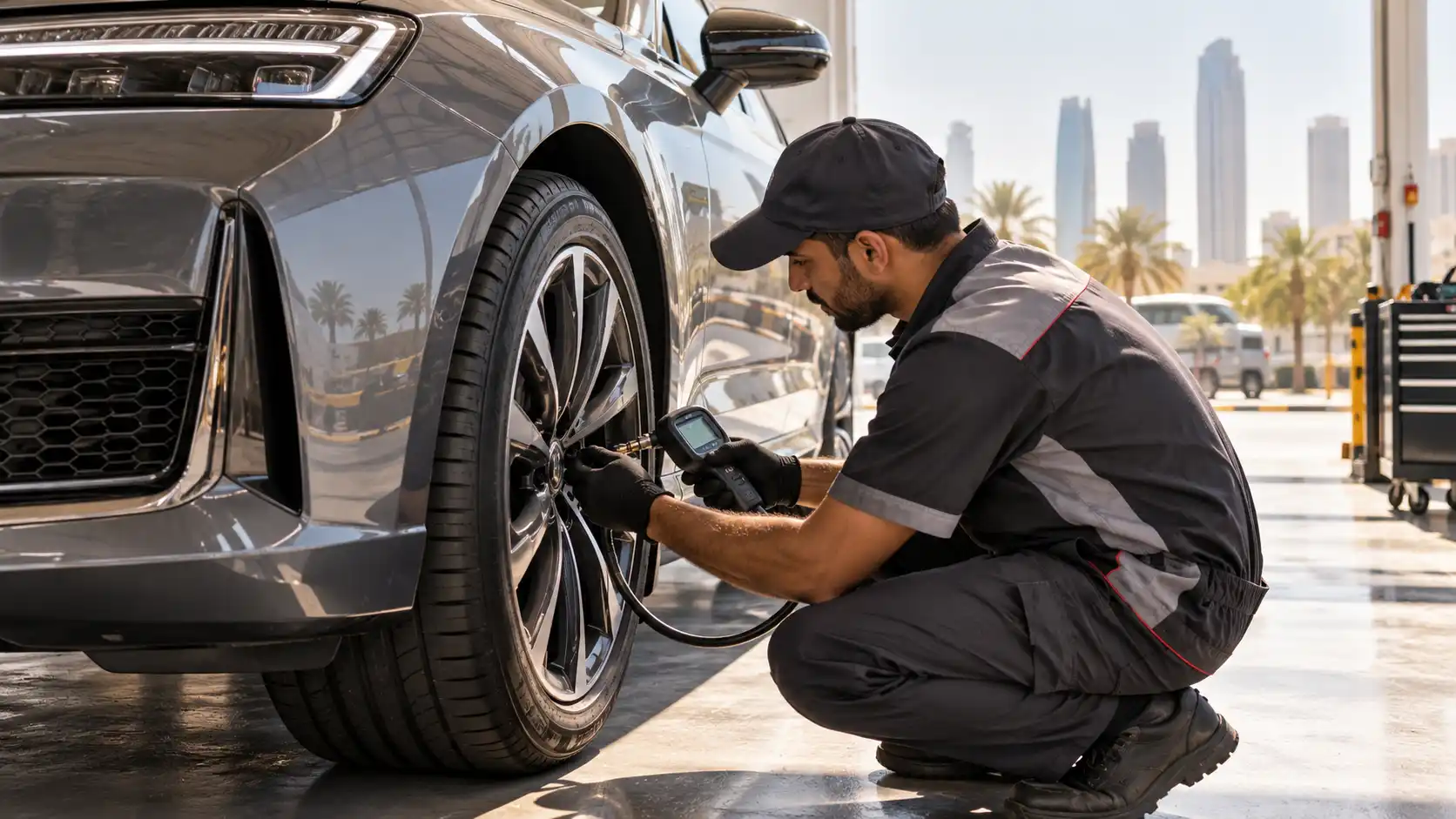
Luxury car tyre maintenance in Abu Dhabi should focus on tyre pressure, tread depth, wheel alignment, tyre condition, and correct tyre storage. Drivers should check tyre pressure regularly, inspect the sidewalls for damage, maintain proper wheel alignment, and replace tyres when they reach the end of their safe life.
A good tyre can improve braking, cornering, ride comfort, and fuel use. It also helps advanced systems such as ABS, traction control, and electronic stability control work as designed. The following five tips can help luxury car owners keep their tyres in better condition throughout the year.
Why Luxury Car Tyres Need Extra Care in Abu Dhabi
Luxury cars often use large alloy wheels and low-profile tyres. These tyres can offer better steering response and a more sporty feel, but they usually have less sidewall height to absorb road impacts. This means potholes, sharp road edges, and damaged roads can cause more stress to the tyre and wheel.
Abu Dhabi's hot climate adds another concern. Heat can increase tyre temperature during driving, while low tyre pressure can create even more heat through extra sidewall flex. Regular checks can help detect pressure loss, uneven wear, cracks, and other problems before they affect driving safety.
5 Precious Tips for Luxury Car Tyre Maintenance
Taking care of premium tyres does not always require complicated work. Small checks performed at the right time can help prevent uneven wear and unexpected tyre damage. These five tips cover the main areas that luxury car owners should watch.
1. Check Tyre Pressure Regularly
Correct tyre pressure is one of the most important parts of tyre care. Every luxury car has a recommended pressure, normally shown on a label inside the driver's door or in the owner's manual. The correct value can be different for the front and rear tyres, especially on high-performance cars.
Underinflation increases rolling resistance and causes more sidewall flex. This can create extra heat and speed up tyre wear. Overinflation can reduce the tyre's contact area with the road and may affect ride comfort and grip. Check pressure when the tyres are cold for a more accurate reading.
How to Maintain the Correct Pressure
Check all tyres at least once a month and before long road trips. Use a reliable digital pressure gauge or have the pressure checked at a trusted workshop. Do not use the maximum pressure printed on the tyre sidewall as the normal setting. That number is usually the maximum permitted pressure, not the recommended pressure for your car.
If one tyre keeps losing air while the others remain stable, do not simply refill it every few days. A puncture, damaged valve, bead leak, or wheel problem could be responsible. Finding the source early can prevent further tyre damage.
2. Inspect the Tread and Sidewalls
Tyre tread provides the grip needed for braking, acceleration, and cornering. As the tread becomes worn, the tyre's ability to move water away from the contact patch can decrease. This can affect wet-road grip and increase stopping distance.
The sidewall also needs regular inspection. Look for cuts, cracks, bubbles, bulges, or areas that appear damaged. A sidewall bulge can indicate internal tyre damage after a strong impact. This type of damage should not be ignored, even when the tyre still holds air.
How to Check Tyre Condition
Look at the full surface of each tyre, including the inner side where possible. Check for uneven wear across the tread. If the centre is wearing faster than the edges, pressure may be too high. If both edges are wearing faster, pressure may be too low.
Uneven wear on one side can point to a wheel alignment or suspension problem. If you notice a deep cut, large crack, exposed cord, or bulge, have the tyre inspected immediately. A damaged tyre may fail suddenly under heat and load.
3. Keep Wheel Alignment and Balancing in Check
Wheel alignment controls how the wheels sit and point in relation to the road and each other. Important alignment angles include camber, caster, and toe. When these settings are incorrect, the tyres may wear unevenly, and the car may pull to one side.
Wheel balancing is different. It corrects weight differences around the wheel and tyre assembly. Poor balance can cause vibration through the steering wheel or body, especially at higher speeds. Both alignment and balancing are important for luxury cars because their suspension and steering systems are designed to provide precise handling.
When Should You Check Alignment and Balance?
Have the wheels checked if the car pulls to one side, the steering wheel is no longer straight while driving on a level road, or the tyres show uneven wear. Balancing should be checked if you feel vibration at certain speeds.
A wheel alignment check is especially useful after hitting a pothole or road edge. Abu Dhabi drivers who regularly travel on highways should not ignore steering changes or unusual tyre wear. Correct alignment can help the tyres wear more evenly and maintain proper road contact.
4. Choose the Right Tyres for Your Luxury Car
Not every tyre that fits a wheel is the right choice for a luxury car. Tyres differ in size, load index, speed rating, tread design, construction, and compound. Some premium cars are designed around specific tyre specifications to match their suspension, steering, and braking systems.
Using the wrong tyre size or rating can change the way the car handles. A tyre with an unsuitable load index may not be designed to carry the required weight. A lower speed rating may also be unsuitable for a car designed for high-speed performance.
How to Choose the Correct Tyre
Check the size and specifications listed by the car maker before buying new tyres. The information may include measurements such as 255/40 R20, along with a load index and speed rating.
Run-flat tyres, performance tyres, and standard tyres also have different features. Some luxury cars are fitted with run-flat tyres from the factory, while others require conventional tyres. If you are unsure, ask a qualified technician to confirm the correct specification for your exact model.
It is also important to check the tyre's production date. Tyres age even when they have not been driven much. Heat, sunlight, storage conditions, and time can affect rubber compounds.
5. Rotate and Replace Tyres at the Right Time
Tyre rotation can help spread wear more evenly, but the correct rotation pattern depends on the tyre and vehicle. Some luxury cars use different tyre sizes on the front and rear axles, which may prevent normal front-to-rear rotation. Directional tyres and some staggered setups have their own requirements.
Replacing tyres at the right time is just as important. Do not wait for a tyre to become completely worn before planning replacement. Age, cracks, repeated repairs, tread wear, and damage can all affect tyre safety.
How to Know When Tyres Need Replacement
Check the tread wear indicators built into the tyre grooves. These raised bars help show when the tread has reached its legal or safety limit. However, tread depth is not the only factor. A tyre may need replacement because of sidewall damage, cracks, uneven wear, repeated punctures, or age.
If your tyres have been used for several years, ask a tyre professional to inspect their condition even if the tread still looks acceptable. Luxury car tyres can be expensive, but replacing worn or damaged tyres is far safer than trying to extend their life too far.
Do Not Ignore Tyre Pressure Monitoring System Warnings
Many modern luxury cars have a Tyre Pressure Monitoring System, or TPMS. It uses sensors to monitor tyre pressure and warns the driver when pressure drops below a set level. Some systems show individual pressure readings, while others only display a warning.
A TPMS warning should not be treated as a simple dashboard message. Low pressure can affect handling, braking, tyre temperature, and tread wear. Check the tyre as soon as possible. If the pressure drops again after filling, there may be a puncture, valve problem, or another air leak.
How Driving Habits Affect Luxury Car Tyres
The way you drive can have a direct effect on tyre life. Sudden acceleration, hard braking, fast cornering, and hitting road edges can increase tyre wear and put extra stress on the sidewalls. Frequent harsh braking can create uneven tread wear, while aggressive cornering places greater loads on the outer edges of the tyres. Keeping up with routine car maintenance on time helps as well.
Smooth driving helps reduce unnecessary stress. Slow down before rough road surfaces, avoid hitting potholes when possible, and do not park with the tyre pressed hard against a kerb. These simple habits can help protect both the tyres and expensive alloy wheels.
Why Wheel Alignment Matters After a Pothole Impact
A strong pothole impact can change wheel alignment or damage a suspension component. The driver may notice that the steering wheel is no longer straight, the car pulls to one side, or the tyre begins wearing unevenly.
The damage is not always visible from outside. A wheel may look normal but still have a bent rim or alignment issue. After a strong impact, inspect the tyre, wheel, suspension, and alignment rather than waiting for symptoms to become worse. Early inspection can help protect a costly set of luxury tyres and alloy wheels.
Should Luxury Car Tyres Be Inflated With Nitrogen?
Nitrogen is sometimes used in tyres because it can reduce the amount of moisture and may help maintain pressure more consistently in certain conditions. However, ordinary compressed air is already mostly nitrogen, and keeping the tyres at the correct pressure is more important than choosing one gas over another.
If nitrogen is available, it can be used, but there is no need to let a tyre become underinflated while waiting for nitrogen service. Correct pressure, regular inspection, proper alignment, and good tyre condition have a much greater effect on everyday tyre performance.
How to Store Spare Luxury Car Tyres
If you keep an extra set of tyres, proper storage can help protect the rubber. Store tyres in a cool, dry, and shaded place away from direct sunlight. Keep them away from oil, fuel, solvents, electrical equipment that produces ozone, and other chemicals that may affect rubber.
Avoid leaving tyres outside in direct Abu Dhabi sunlight for long periods. If tyres are stored for an extended time, they should be inspected before being fitted again. Look for cracks, hardening, deformation, or other signs of ageing.
Final Thoughts
Proper tyre care is an important part of keeping a luxury car safe, comfortable, and enjoyable to drive in Abu Dhabi. Check tyre pressure regularly, inspect the tread and sidewalls, maintain wheel alignment and balance, use the correct tyre specification, and replace tyres when they show serious wear or damage.
Do not ignore small changes such as steering vibration, pulling, repeated air loss, or uneven tread wear. These signs can point to a tyre, wheel, alignment, suspension, or pressure problem. Regular checks can help protect your tyres and reduce the chance of an unexpected issue during a long drive.
For professional tyre inspection, wheel alignment, balancing, suspension checks, and luxury car service in Abu Dhabi, contact Zenfo Auto Services. A proper inspection can help identify tyre-related problems early and keep your car ready for daily driving and long road trips.
Related Services
Related Articles
Need a hand with your car?
Zenfo Auto Services, Mussafah, Abu Dhabi. Free pick-up, honest quotes.