
Burning Smell from Your Car? Diagnose & Repair Automotive Electrical Systems
You switch on the AC and catch a sharp smell of hot plastic. A minute later it fades, so you keep driving. That small whiff can be the first warning of a wire melting behind the dashboard.
Quick Summary
A burning smell from your car usually means overheating wiring, a shorted component, a melted fuse or connector, a failing blower motor, or a faulty alternator. Hot plastic is the clearest electrical sign. Stop the car, switch off the engine, and have the electrical system checked before driving on.
A burning smell from your car usually points to overheating wiring, a shorted component, a melted fuse or connector, a failing blower motor, or a faulty alternator or starter. A smell like burning plastic or electrical insulation is the clearest sign of an electrical fault.
Other smells, such as hot oil, sweet coolant, or burnt rubber, point to leaks, belts, or brakes instead. Whatever the cause, stop the car safely, switch off the engine, and have the electrical system checked before driving further.
Why a Burning Smell Needs Immediate Attention
Car fires in the UAE are not rare, and heat makes them more likely. According to the International Fire & Safety Journal, Ministry of Interior figures show 43% of vehicle fires in 2024 were linked to heat, with 2,189 vehicle fires reported across Abu Dhabi and Dubai that year.
Electrical faults are a leading cause. Globally, around 20% of vehicle fires are traced back to electrical failure. UAE Civil Defence investigators repeatedly name poor maintenance of electrical systems, illegal modifications, and non-original parts that do not suit the car's electrical system among the main triggers.
The pattern is consistent. A wire's insulation softens or chafes, current leaks, heat builds, and the smell comes before the smoke. Acting on the smell is the cheapest and safest point to fix the problem.
What to Do the Moment You Smell Burning
Pull over as soon as it is safe, switch off the engine, and turn off the AC and accessories. Do not keep driving to see whether the smell goes away.
If you see smoke or flames, get everyone out of the car, move well away, and call Civil Defence on 997. Do not open the bonnet if smoke is coming from it, because fresh air can feed a fire. If there is no smoke, let the car cool, then note where the smell seemed strongest: the dashboard, the engine bay, a wheel, or the rear.
That detail helps a technician narrow the cause quickly. If the smell was clearly electrical, have the car collected rather than driving it to a workshop.
Identify the Smell Before You Diagnose
Different faults produce different smells. This guide helps you describe what you noticed and judge how urgent it is.
| Smell | Likely source | Urgency |
|---|---|---|
| Burning plastic or electrical insulation | Overheated wiring, shorted component, melted connector or fuse | Stop driving now |
| Hot plastic only when the fan or AC runs | Blower motor or blower resistor overheating | Stop using the fan, check soon |
| Burning rubber | Slipping drive belt or a hose touching a hot part | Check before next drive |
| Burnt oil | Oil leaking onto the hot exhaust manifold | Check within days |
| Sweet, syrupy smell | Coolant leaking from the radiator, hoses, or heater core | Check before overheating |
| Sharp, acrid smell near a wheel | Dragging brake or seized caliper | Stop and check |
| Rotten eggs | Failing catalytic converter or overcharged battery | Check soon |
Electrical Causes of a Burning Smell
When the smell is like hot plastic or melting insulation, the electrical system is the main suspect. These are the most common sources.
Overheated or Shorted Wiring
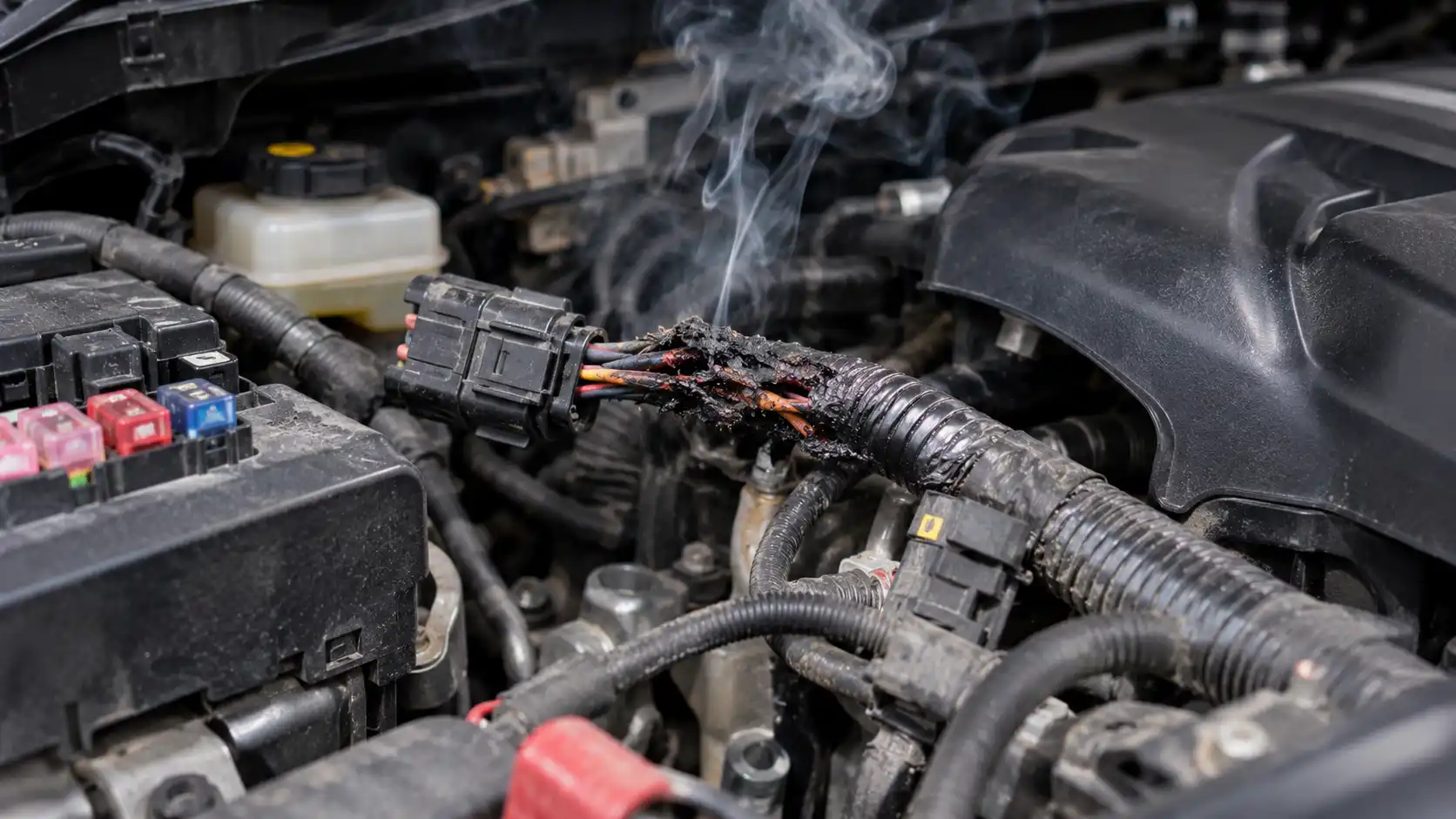
Wiring harnesses run through hot engine bays and tight spaces under the dashboard. Over time, heat hardens the insulation, vibration rubs it against metal edges, and a bare wire touches ground or another circuit. The short draws excess current and heats the wire until the insulation smokes.
UAE heat speeds up this ageing. Harnesses near the exhaust, turbo, or engine block are especially exposed.
Blown Fuses and Melted Connectors
Fuses are meant to blow before wires overheat. A loose or corroded connection, though, can heat up without drawing enough current to blow the fuse. The result is a melted connector or fuse holder, often in the fuse box or behind a headlight.
Replacing a blown fuse with a higher-rated one is a common and dangerous shortcut. It removes the protection and lets the wire become the weakest point.
Failing Blower Motor or Resistor
If the smell appears only when the fan runs, the blower motor or its resistor is a likely cause. A worn motor draws more current and runs hot. The resistor, which controls fan speed, can overheat and melt its connector. Dust and leaves drawn into the blower housing add to the risk.
Alternator and Starter Faults
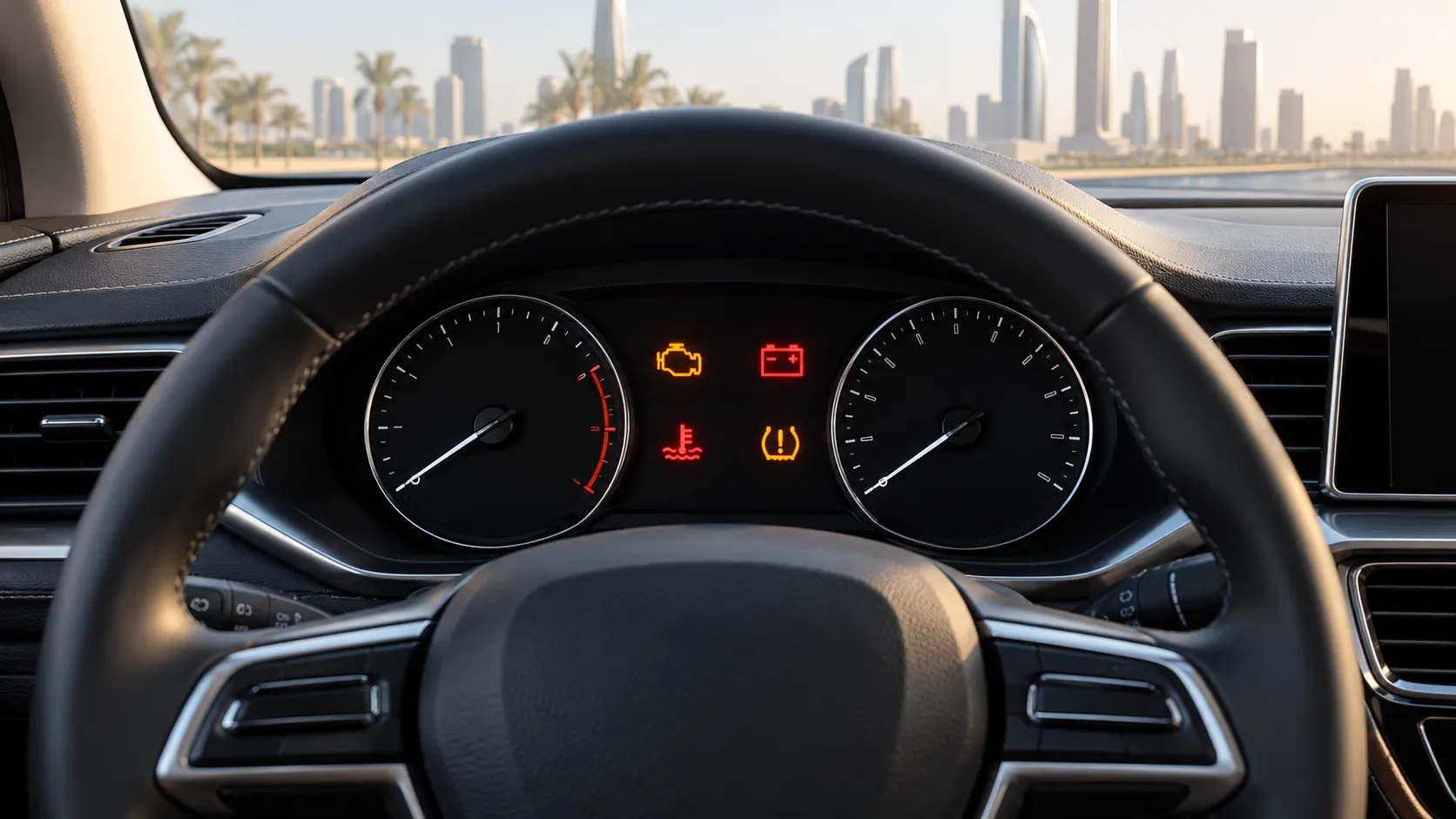
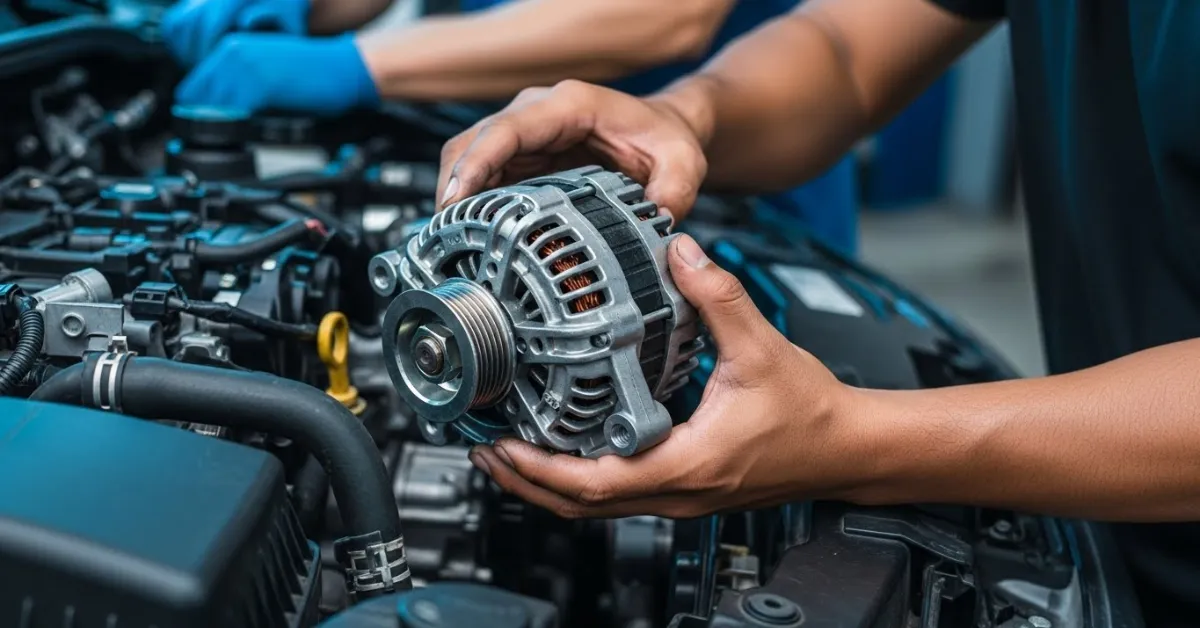
A failing alternator can overheat internally, and a faulty voltage regulator can overcharge the system, cooking wiring and the battery. A starter that stays engaged after the engine starts can also smell hot. Dimming lights, a battery warning light, or a whining noise often appear alongside.
Battery Terminals and Cables
Loose or corroded battery terminals create resistance and heat at the clamp. Heavy starter and battery cables carry very high current, so a poor connection there can quickly overheat. A white or green crust on the terminals is a warning sign.
Aftermarket Accessories and Modifications
Dashcams, extra lights, sound systems and phone chargers are often wired in by tapping into existing circuits. Poor splices, missing fuses or undersized wire can overload a circuit. Cheap chargers and cables left plugged in can overheat on their own in a hot cabin.
Non-Electrical Causes Often Mistaken for Electrical
Not every burning smell is electrical, and treating the wrong system wastes time and money.
Oil on the Exhaust
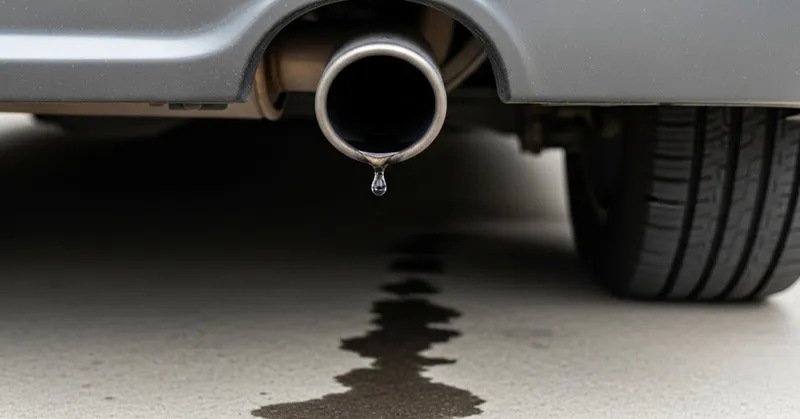
A leaking valve cover gasket or oil filter can drip oil onto the exhaust manifold. It burns off with a sharp, smoky smell, often with light blue smoke from the engine bay. Exhaust leaks can produce related smells, as our guide to an exhaust leak explains.
Coolant Leaks
Coolant has a sweet smell when it burns off hot parts. A leak from the radiator, hoses, or heater core can lead to overheating if ignored. Our post on engine overheating covers how to spot and prevent it.
Belts, Brakes and Clutch
A slipping drive belt smells of burnt rubber. A sticking brake caliper gives a sharp smell near one wheel, and a slipping clutch on manual cars smells acrid after hill starts or heavy traffic.
How Technicians Diagnose an Electrical Burning Smell
Electrical faults can be hard to find, because the damage may be hidden inside a harness or behind trim. A methodical process avoids guesswork.
Scan and Visual Inspection
The first step is a diagnostic scan of the car's control units, which often store fault codes from shorted circuits. Technicians then inspect harnesses in the engine bay and under the dashboard for melted insulation, scorch marks, chafing, and loose connectors.
Component and Circuit Testing
Multimeters and circuit testers measure voltage, current draw, and resistance on suspect circuits. Oscilloscopes help catch intermittent faults that only appear when the car is moving or hot. Battery analysers check charging voltage and battery health.
Repair to Factory Standards
Damaged wiring should be repaired with automotive-grade wire and proper connectors, following the manufacturer's wiring diagrams. Fuses must match the factory rating. After repair, the full system is tested again before the car goes back on the road.
Preventing Electrical Burning Smells in UAE Heat
Most electrical fires start with faults that build slowly. Regular checks of the battery, terminals, charging system, and visible wiring catch many of them early. Have accessories fitted by qualified technicians using fused circuits and original or approved parts.
Keep the cabin clear of lighters, perfume bottles, and power banks in summer, and unplug chargers when you leave the car. Replace cabin filters on time to keep the blower motor running cool. If a fuse blows repeatedly, treat it as a symptom, not the problem.
Frequently Asked Questions
Is it safe to drive with a burning plastic smell?
No. A burning plastic smell often means wiring or a connector is overheating, which can lead to a fire. Pull over safely, switch off the engine and accessories, and have the car inspected before driving it again.
Why does my car smell like burning when the AC is on?
The blower motor or its resistor is a common cause, especially if the smell comes with the fan. Debris in the blower housing or a failing AC compressor clutch can also cause it, so the system should be checked.
Can a bad alternator cause a burning smell?
Yes. A failing alternator can overheat, and a faulty voltage regulator can overcharge the system and heat the wiring and battery. Dim lights, a battery warning light, and whining noises often come with it.
What does a burning electrical smell smell like?
It usually smells like hot or melting plastic, sharp and chemical rather than oily or sweet. It may be strongest near the dashboard, fuse box, or engine bay, and sometimes appears only when a certain circuit is switched on.
Should I replace a blown fuse myself?
You can replace a fuse with one of the same rating, but if it blows again, there is a fault in the circuit. Never fit a higher-rated fuse, because it removes the protection and can let wiring overheat.
Conclusion
A burning smell is your car's early warning system. Hot plastic or insulation smells point to electrical faults such as shorted wiring, melted connectors, blower problems, or charging faults, while oil, coolant, and rubber smells point elsewhere.
Stopping early, identifying the smell, and getting a proper diagnosis prevents small faults from becoming fires. Get a fast, accurate diagnosis with electrical repair from Zenfo Auto Services, with free pick-up so you never have to drive a car that smells of burning.
Related Articles
Need a hand with your car?
Zenfo Auto Services, Mussafah, Abu Dhabi. Free pick-up, honest quotes.