Dashboard Warning Lights: A Simple Guide for Abu Dhabi Drivers
A warning light on your dashboard can appear without warning and leave you wondering if you should keep driving or stop the car. Knowing what each symbol means can help you react early and avoid a costly repair.
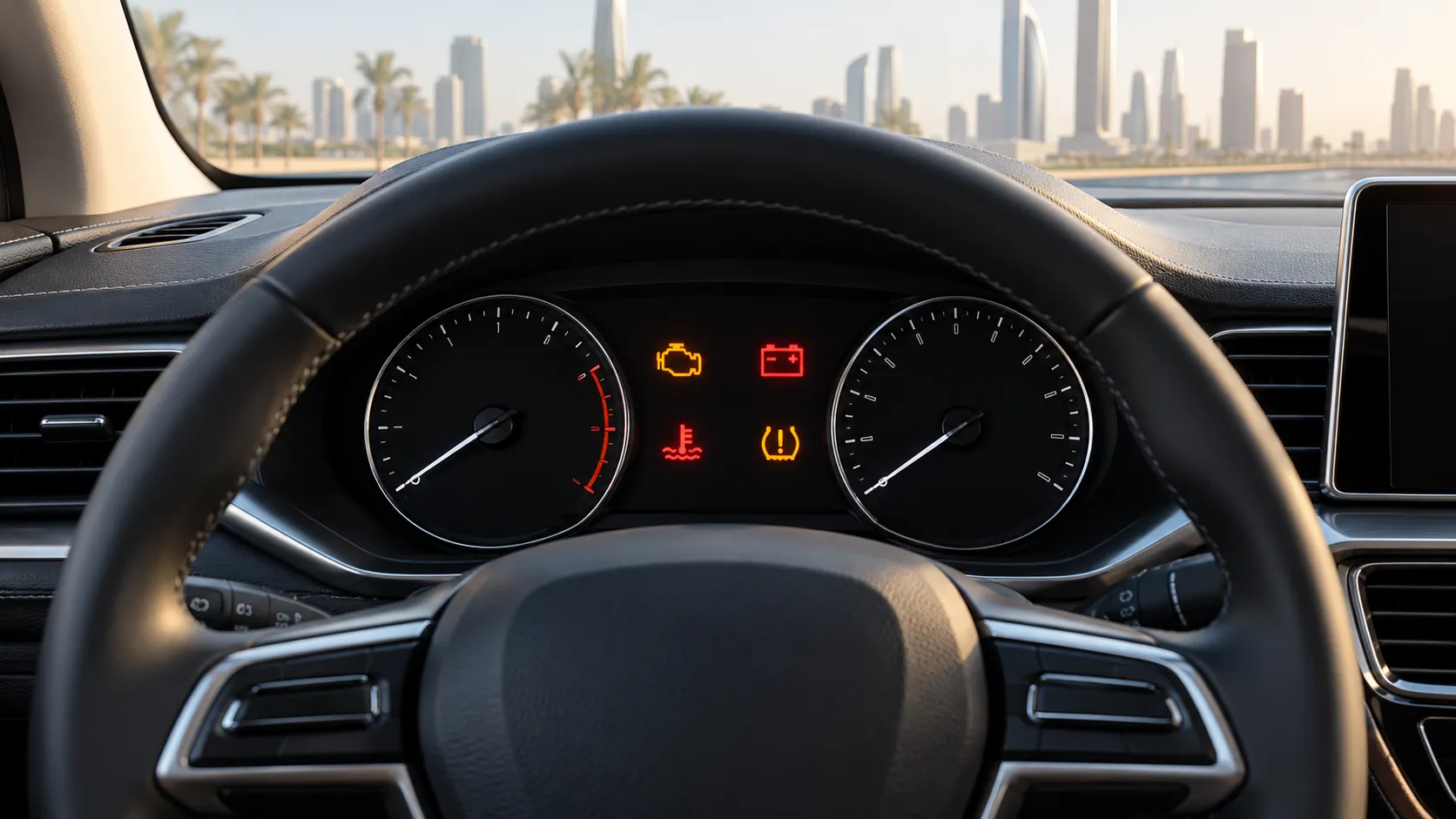
Dashboard warning lights are used to tell you about problems with systems such as the engine, brakes, battery, oil pressure, cooling system, tyres, and airbags. Some lights only give information, while others mean you should stop driving as soon as it is safe.
A red oil pressure light can mean that the engine is not getting enough lubrication and needs quick attention. The red battery light usually points to a charging system problem, while the temperature warning warns that the engine may be overheating. Brake, ABS, airbag, seat belt, and tyre pressure lights can point to safety or control issues.
Yellow or amber lights normally mean that a system needs checking soon, such as the check engine, traction control, tyre pressure, or ABS. Green and blue lights are usually information lights, such as headlights or high beams. Knowing the difference is especially useful for drivers in Abu Dhabi, where high heat and long drives can place extra stress on some car systems.
What Do Dashboard Warning Light Colours Mean?
Dashboard light colours give you a quick idea of what needs attention. However, the exact meaning can differ between car brands and models, so always check the owner's manual for your specific car.
| Light Colour | General Meaning | What You Should Do |
|---|---|---|
| Red | Serious problem or safety warning | Stop safely and check the issue as soon as possible |
| Yellow / Amber | A system needs inspection or service | Arrange a check soon, especially if the light stays on |
| Green | A system or feature is active | Usually no action is needed |
| Blue | A specific feature is active | Usually informational, such as high beam headlights |
A flashing warning light can be more serious than a steady light. If the car is losing power, overheating, making unusual sounds, or becoming difficult to control, stop driving when it is safe to do so.
Dashboard Warning Lights You Should Know
Different cars use different symbols, but most modern cars have a similar set of warning lights. The sections below explain the most common ones, what they can mean, and what you should do when they appear. A warning light should never be ignored simply because the car still feels normal. Some faults begin without clear symptoms and can become more serious later.
1. Check Engine Light
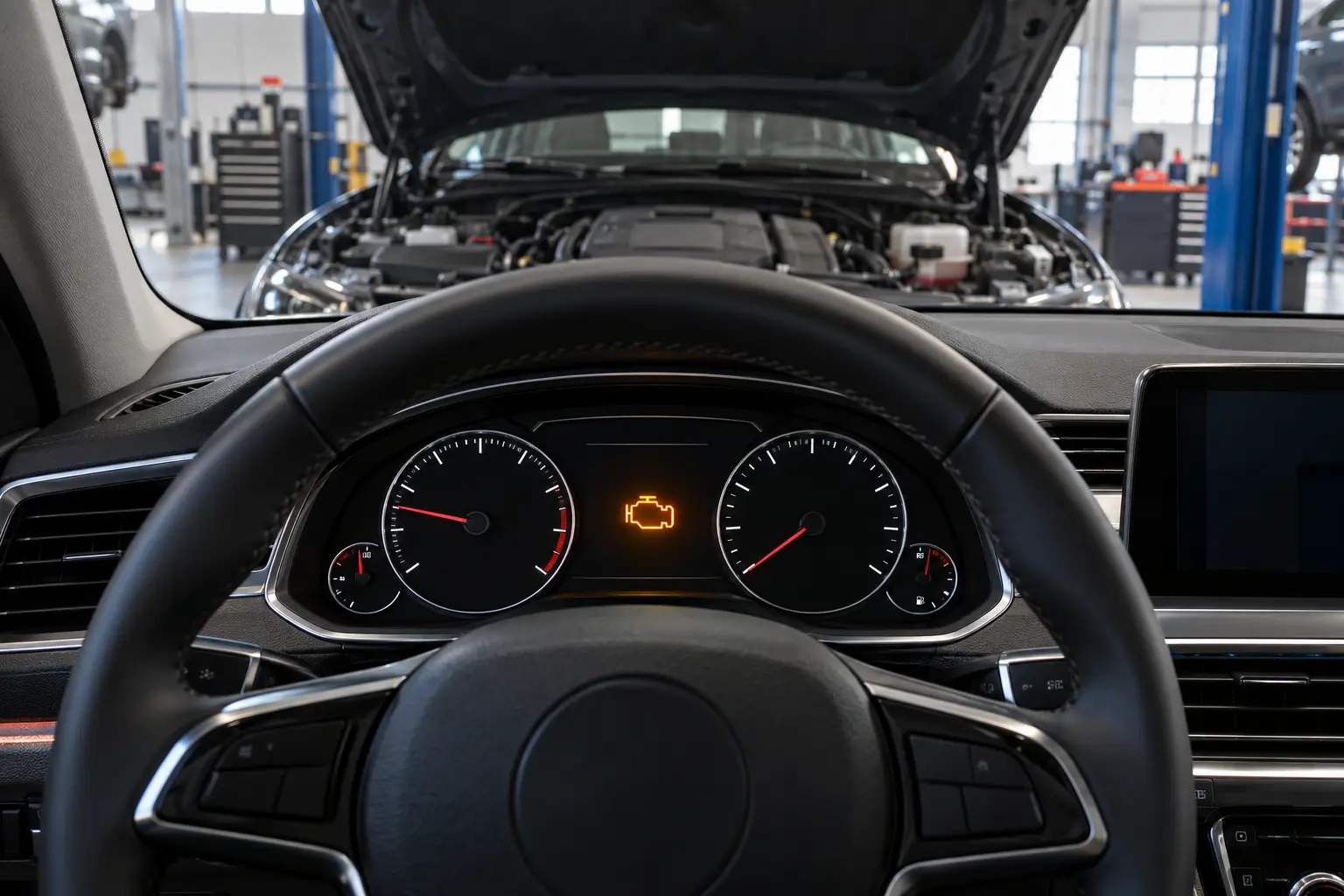
The check engine light is one of the most common warning symbols. It can appear when the engine control unit detects a fault in the engine, fuel, exhaust, or emissions system. A loose fuel cap, faulty oxygen sensor, ignition problem, damaged spark plug, fuel injector fault, or catalytic converter issue can trigger it.
If the light stays on, the car should be scanned with an OBD-II diagnostic tool. A flashing check engine light is more serious and may indicate an active misfire that can damage the catalytic converter.
How to Fix It
Start by checking that the fuel cap is fitted correctly. If the light remains on, have the vehicle scanned to read the stored diagnostic trouble code. Do not replace parts based only on the warning symbol.
The code helps a mechanic find the affected system, but further testing may still be needed. If the light is flashing and the engine is shaking, losing power, or running roughly, stop driving when safe and arrange professional assistance.
2. Engine Oil Pressure Warning Light
The oil pressure warning light normally looks like an oil can. It means the engine oil pressure may be too low. Engine oil creates a protective layer between moving parts such as bearings, pistons, camshafts, and crankshaft components.
Low oil level, an oil leak, a blocked oil pickup, a worn oil pump, or internal engine wear can reduce oil pressure. Driving with low oil pressure can cause severe engine damage because metal parts may operate without enough lubrication.
How to Fix It
If the red oil pressure symbol comes on while driving, safely stop the car and switch off the engine. Check the oil level after allowing the engine to cool enough for a safe check.
If the level is low, the correct oil may need to be added, but the reason for the low level should still be found. If the oil level is normal, do not continue driving until the pressure system has been checked by a qualified mechanic.
3. Battery or Charging System Warning Light
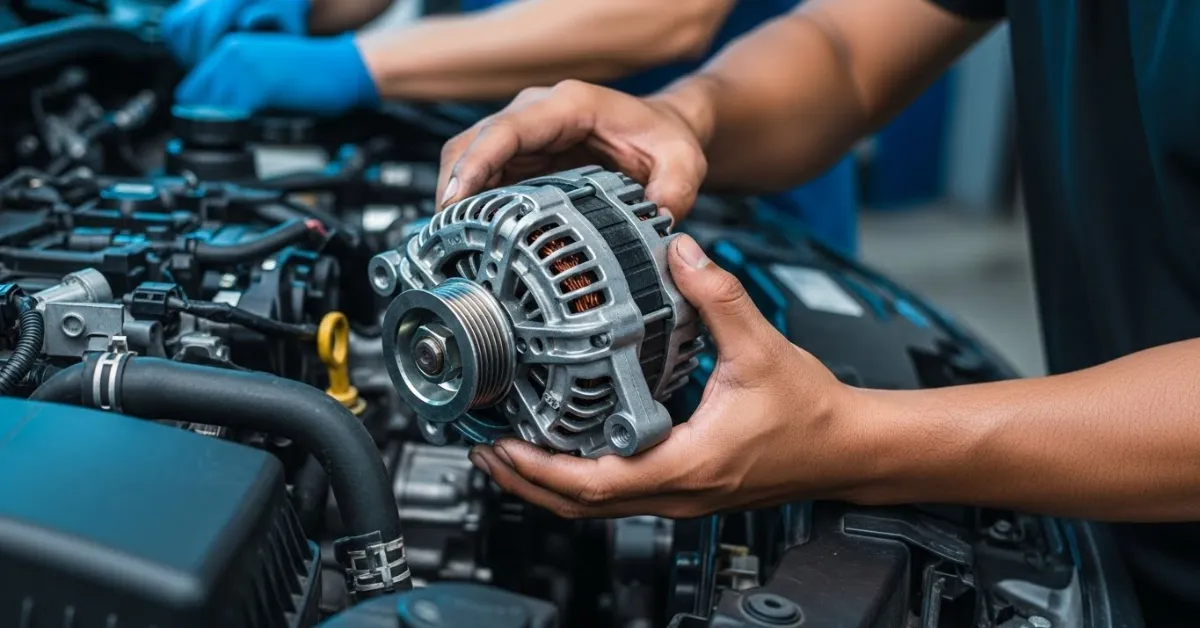
The battery symbol does not always mean that the battery itself has failed. It often shows that the vehicle's charging system is not working correctly. Possible causes include a weak battery, faulty alternator, damaged drive belt, loose battery connection, or wiring problem.
The alternator normally charges the battery while the engine runs and supplies power to electrical systems. If charging stops, the car may continue running for a limited time before the battery becomes fully discharged.
How to Fix It
Have the battery and charging voltage tested instead of replacing the battery without checking the cause. A mechanic can inspect the alternator, battery terminals, drive belt, wiring, and charging system.
If the warning appears with dim lights, electrical problems, or difficulty starting, avoid unnecessary driving. A charging fault can leave the car unable to restart after the engine is switched off.
4. Engine Temperature Warning Light
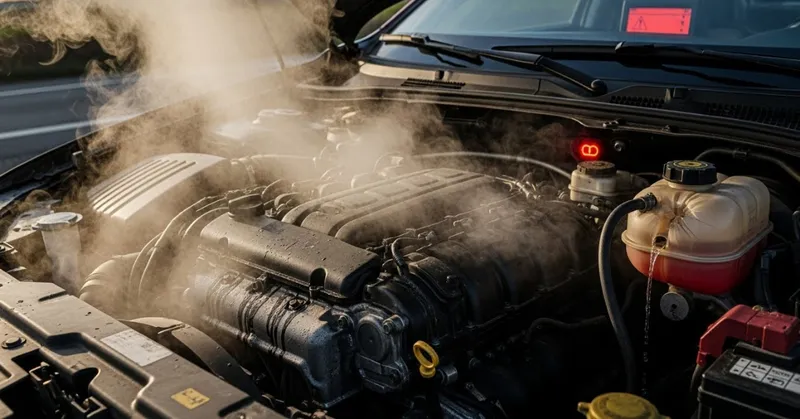
The temperature warning symbol shows that the engine coolant temperature may be too high. Overheating can happen because of low coolant, a coolant leak, a failed thermostat, a damaged radiator, a faulty cooling fan, a blocked radiator, or a water pump problem.
Abu Dhabi's hot weather can make a cooling system fault more difficult for an engine to handle, especially during long traffic stops or extended driving. Continued overheating can damage the cylinder head, head gasket, or other engine parts.
How to Fix It
If the temperature warning becomes red or the temperature gauge moves into the hot zone, stop somewhere safe and turn off the engine. Never remove a hot radiator cap because pressurised coolant can cause serious burns.
Allow the engine to cool before checking the coolant level. A cooling system inspection should be done if coolant is low, leaking, or repeatedly disappearing. Do not keep driving an overheating car just because it starts again after cooling.
5. Brake Warning Light
The brake warning symbol may appear when the parking brake is applied, but it can also indicate a brake system problem. Depending on the car, a red brake light may warn about low brake fluid, worn brake components, or a hydraulic system fault.
Brake fluid transfers pressure from the brake pedal to the braking components. If the fluid level is low because of a leak or worn parts, braking performance may be affected.
How to Fix It
First, check whether the parking brake is fully released. If the warning remains on, have the brake system inspected. The brake fluid level, brake pads, discs, calipers, hoses, and possible leaks should be checked.
Do not simply add fluid and ignore the reason for a low level. If the brake pedal feels soft, sinks toward the floor, or the car takes longer to stop, stop driving and arrange professional repair.
6. ABS Warning Light
The ABS warning light means the anti-lock braking system has detected a fault. ABS uses wheel speed sensors and a control module to prevent the wheels from locking during hard braking.
A faulty wheel speed sensor, damaged wiring, low system voltage, hydraulic fault, or ABS control module problem can trigger the light. The normal brakes may still work when the ABS light is on, but the anti-lock function may not operate correctly during emergency braking.
How to Fix It
An ABS diagnostic scan can identify the system where the fault has been stored. The mechanic may then test wheel speed sensors, wiring, tone rings, the ABS hydraulic unit, and battery voltage.
Avoid treating the ABS light like a service reminder. If it appears together with the red brake warning light, braking performance may be seriously affected, and the car should be inspected before continued use.
7. Tyre Pressure Warning Light
The tyre pressure monitoring system, or TPMS, warns when one or more tyres have pressure outside the recommended range. Low pressure can affect steering, braking, tyre wear, and fuel use.
A puncture is one possible cause, but pressure can also change because of temperature, a leaking valve, or normal air loss. Abu Dhabi's heat can cause tyre pressure readings to change, so checking the pressure regularly is important.
How to Fix It
Check all four tyres, and include the spare if your car's system monitors it. Use the pressure listed on the driver's door label or owner's manual rather than the maximum pressure printed on the tyre sidewall. Look for nails, cuts, bulges, or visible damage.
After correcting the pressure, the TPMS may need to be reset or recalibrated. If the light returns, have the tyres and pressure sensors checked.
8. Traction Control Warning Light
The traction control symbol often looks like a car with curved skid marks underneath. The system helps prevent wheel spin by reducing engine power or applying braking to individual wheels when it detects a loss of traction.
A flashing symbol can simply mean that the system is actively working. A light that stays on may mean the system has been switched off or has detected a fault involving wheel speed sensors, steering angle data, or the stability control system.
How to Fix It
Check whether traction control was accidentally switched off using a dashboard button. If the warning remains on after restarting the car, a diagnostic scan can help identify the cause.
Wheel speed sensors and related wiring are common areas to inspect, but the exact cause depends on the vehicle. Drive carefully if the system is unavailable, especially during sudden manoeuvres or on surfaces where grip is poor.
9. Airbag Warning Light
The airbag warning light shows a possible fault in the supplemental restraint system, often called the SRS. This system can include airbags, seat belt pretensioners, impact sensors, wiring, and the airbag control module.
A fault may prevent one or more airbags from working correctly during a crash. Common causes include wiring faults, damaged connectors, sensor problems, or low system voltage. Because airbags are safety devices, the warning should not be ignored.
How to Fix It
The SRS system should be scanned with a suitable diagnostic tool and inspected by a trained technician. Do not test airbag circuits with ordinary electrical equipment or disconnect components without following the correct service procedure.
A mechanic can check stored fault codes, wiring, connectors, sensors, and the SRS control unit. If the warning light stays on after the engine starts, arrange an inspection rather than assuming the airbags will work normally.
10. Seat Belt Warning Light
The seat belt warning light reminds the driver or passenger to fasten a seat belt. In many cars, the system uses seat sensors to detect whether someone is sitting in a seat. If the belt is not fastened, the light may stay on, and a warning sound may continue.
A warning that remains active even after the belts are fastened can point to a faulty buckle switch, seat sensor, wiring issue, or another restraint system fault.
How to Fix It
Make sure every occupied seat has its belt fastened correctly. Remove heavy objects from passenger seats if they are triggering the weight sensor. If the light or warning sound remains after the belts are properly secured, have the buckle switch and seat sensor checked.
Do not disconnect the warning system to silence it. Seat belts are a key part of the vehicle's restraint system and should work correctly.
11. Fuel Level Warning Light
The low fuel warning light appears when the fuel level reaches a low point. It is not normally a mechanical fault, but it should not be ignored. Running very low on fuel can leave you stranded and may cause problems if the vehicle runs out completely.
Some modern cars also use the fuel pump inside the fuel tank, and keeping the tank extremely low for long periods may increase heat around the pump in certain designs.
How to Fix It
Refuel as soon as practical rather than waiting until the fuel gauge reaches empty. If the warning stays on after refuelling, the fuel level sensor, wiring, or gauge may need inspection. A sudden change in the fuel reading can be another sign of a sensor problem.
Keep enough fuel for your normal driving distance, especially before long trips outside central Abu Dhabi where finding a suitable fuel stop may take more planning.
12. Power Steering Warning Light
The power steering warning light means the steering assistance system may have a fault. Modern cars often use electric power steering, while some older models use hydraulic systems.
Problems can involve the electric motor, steering control module, wiring, battery voltage, steering angle sensor, or hydraulic fluid and pump on hydraulic systems. If steering assistance is lost, the wheel may become much harder to turn, especially at low speeds.
How to Fix It
If the steering suddenly becomes heavy, slow down and stop somewhere safe. Check for other warning lights because low battery voltage can sometimes affect electric steering systems.
A diagnostic scan can help identify electronic faults, while hydraulic systems may need fluid, belt, pump, or leak checks. Avoid continuing to drive if steering control feels unsafe. Professional inspection is important because steering is directly linked to vehicle control.
13. Washer Fluid Warning Light
The washer fluid warning symbol tells you that the windscreen washer reservoir is low. It is usually not a serious mechanical problem, but clean glass is important for safe driving.
Dust, sand, insects, and road dirt can build up on the windscreen, especially in dry and dusty conditions. Without enough washer fluid, the wipers may not be able to clear the glass properly. This can reduce visibility when the windscreen becomes dirty.
How to Fix It
Fill the washer reservoir with a suitable screen-wash fluid. Avoid using products that can damage the washer system or leave a heavy residue on the glass. If the tank is full but the warning remains, the level sensor or wiring may need checking.
Also inspect the washer jets and pump if fluid does not spray onto the windscreen. Good visibility is important, so this small warning should still be dealt with promptly.
Final Takeaway
Dashboard symbols give you an early warning that something in your car needs attention. Red lights such as oil pressure, engine temperature, and serious brake warnings need immediate care, while amber symbols such as check engine, ABS, TPMS, and traction control usually need a timely inspection.
A battery warning can point to the charging system, while airbag and steering warnings can affect safety. If a warning light stays on or returns after a restart, do not rely only on how the car feels. Car dashboard warning lights should be checked early so the real fault can be found before it causes bigger damage.
For reliable inspection, diagnostics, maintenance, and car repair in Abu Dhabi, Zenfo Auto Services can help identify warning light faults and check the related vehicle systems. Get the problem diagnosed early so you can drive with greater confidence.
Related Articles
Need a hand with your car?
Zenfo Auto Services, Mussafah, Abu Dhabi. Free pick-up, honest quotes.