
Can I Use Rubbing Compound on Headlights?
Your headlights used to look crystal clear. Now they are dull, yellow, and throw a weak beam onto the road. A tube of rubbing compound in the garage looks like an easy fix, and sometimes it is.
Quick Summary
Yes, rubbing compound works on headlights with light to moderate haze. It abrades away the oxidised outer layer of the plastic lens. It also strips the remaining factory UV coating, so the lens must be polished and sealed with a UV protectant afterwards. Heavy oxidation and cracked lenses need sanding or professional restoration.
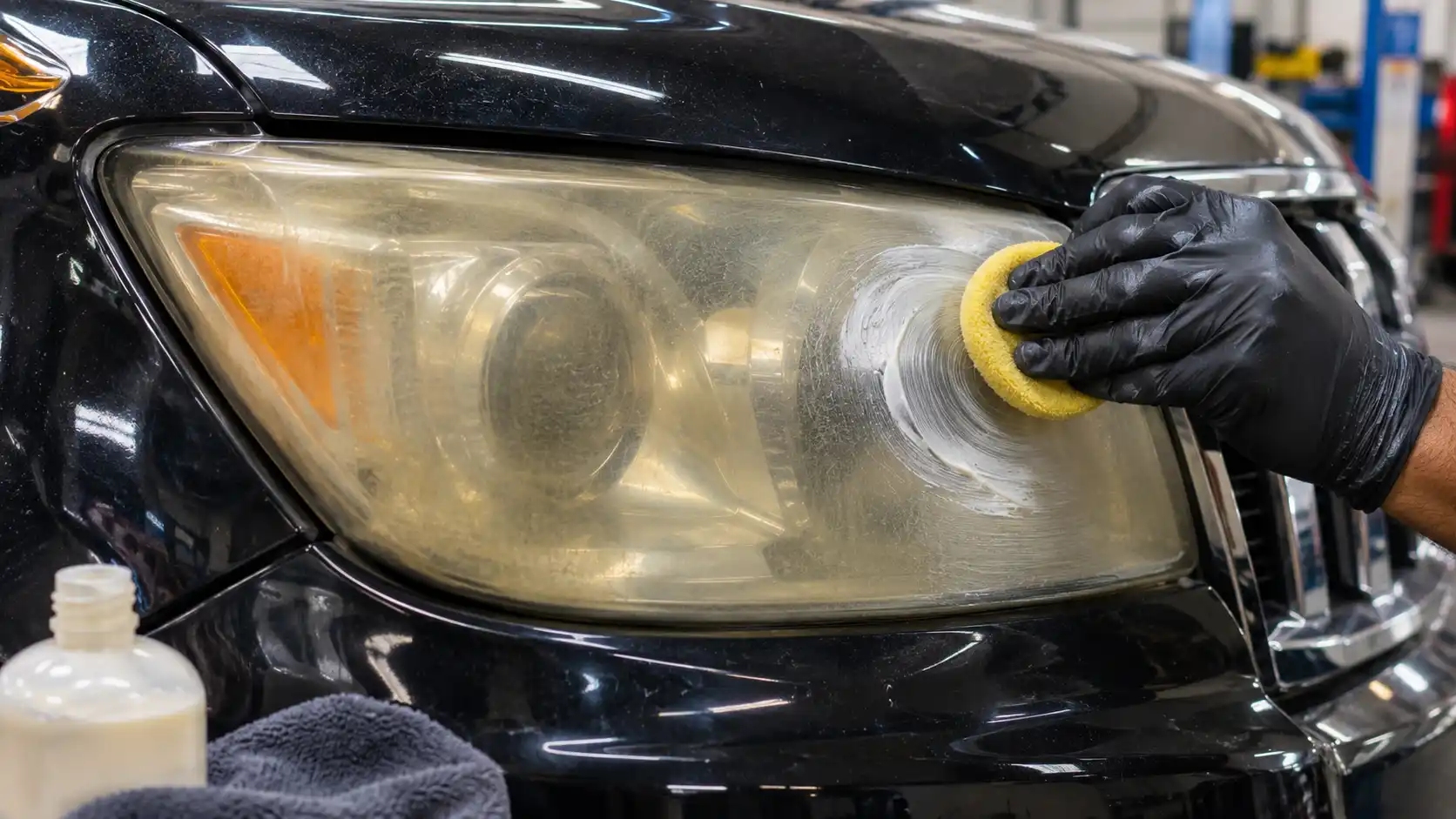
Yes, you can use rubbing compound on headlights to remove light to moderate haze and yellowing. It works by abrading away the oxidised outer layer of the plastic lens.
The catch is that it also strips any remaining factory UV coating, so the lens must be refined with a finer polish and sealed with a UV protectant afterwards, or it will yellow again within months. Heavy oxidation and cracked lenses need wet sanding or professional restoration instead.
Why Headlights Turn Yellow and Cloudy
Most modern headlight lenses are made of polycarbonate, a tough plastic that resists impacts but breaks down under UV light. Car makers protect it with a thin clear hardcoat. Once sunlight and road grit wear through that coating, the plastic beneath oxidises, turning yellow and hazy.
The effect on night driving is serious. Lab testing by AAA found that deteriorated headlights on low beam gave just 22% of the light of new headlights. Restoration brought output back to around 70%, while replacement with original parts restored 100%. AAA also notes lenses can begin showing deterioration within three to five years.
In Abu Dhabi, strong year-round sun and blowing sand speed up both UV damage and abrasion. Cars parked outdoors often show yellowing sooner than the same models in milder climates.
The Thin Layer That Protects Your Lens
The factory hardcoat is extremely thin, typically somewhere around 10 to 25 microns. That is thinner than a human hair. It blocks UV and resists light scratches, but once it cracks or wears away, nothing protects the raw polycarbonate.
This is why restoration is only half the job. Removing the yellowed layer without replacing the protection leaves fresh plastic exposed to the same sun that damaged it.
What Rubbing Compound Actually Does to a Headlight Lens
Rubbing compound is a paste filled with fine abrasive particles. As you work it over a surface, it cuts away a microscopic layer of material. On paint, that removes scratches and oxidation. On a headlight, it removes the yellowed, oxidised plastic.
Rubbing Compound vs Polishing Compound
The two are often confused, but they do different jobs. Rubbing compound cuts faster and leaves a fine haze. Polishing compound is finer and refines the surface to full clarity.
| Product | Abrasiveness | What it does on a headlight | Where it fits |
|---|---|---|---|
| Rubbing compound | Medium to high | Removes oxidation and light sanding marks | After sanding, or alone for moderate haze |
| Polishing compound | Low to medium | Removes compound haze and restores clarity | After rubbing compound |
| Finishing polish | Very low | Brings out final gloss | Final step before sealing |
| Glass polish (cerium oxide) | Designed for glass | Can haze or scratch soft plastic | Avoid on headlights |
Always choose products marked safe for plastic or clear coats. Compounds designed for glass are made for a much harder surface and can damage polycarbonate.
When Rubbing Compound Works and When It Does Not
The result depends on how far the damage has gone. This guide matches the lens condition to the right method.
| Lens condition | What you see | Will rubbing compound fix it? | Better approach |
|---|---|---|---|
| Light haze | Slight dullness, beam still bright | Yes, often with polish alone | Polish, then UV sealant |
| Moderate yellowing | Clear yellow tint, mild cloudiness | Yes, usually | Compound, polish, UV sealant |
| Heavy oxidation | Thick yellow, rough feel | Only partly | Wet sanding first, then compound and seal |
| Crazing or cracks | Fine spider-web cracks in the plastic | No | Professional resurfacing or replacement |
| Haze or moisture inside | Fog or droplets behind the lens | No | Seal repair or headlight replacement |
Run a finger over the lens. If it feels rough, the oxidation is deep enough to need sanding before compound will clear it.
How to Use Rubbing Compound on Headlights Safely
Done carefully, a compound restoration takes about 30 to 60 minutes per pair. Work in the shade on a cool lens.
Clean and Mask the Area
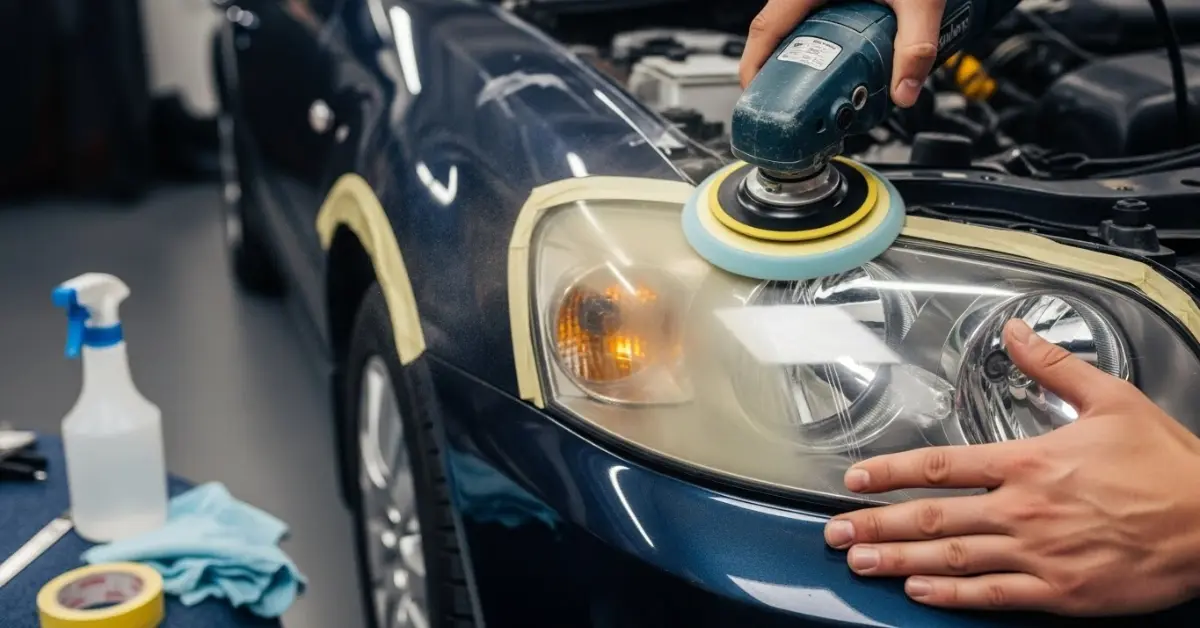
Wash the headlights with soapy water to remove sand and grime, then dry them fully. Mask the surrounding paint and trim with painter's tape, using two layers near edges. Rubbing compound will dull paint if it slips onto the bodywork.
Test a Small Section First
Apply a small amount of compound to one corner and work it in. Wipe it off and check under good light. If the yellow lifts and the plastic looks clearer, continue. If nothing changes, the oxidation is too deep and sanding is needed.
Apply the Compound With Steady Pressure
Use a microfibre applicator or a foam pad on a dual-action polisher at low to moderate speed. Work in overlapping passes across small sections. Avoid high speeds and rotary polishers, because heat can distort or burn polycarbonate. Wipe off residue regularly to check progress.
Refine With a Finer Polish
Rubbing compound leaves a fine haze of its own. Follow with a polishing compound and a clean pad to bring back full clarity. Wipe the lens with an alcohol-based panel cleaner to remove oils before sealing.
Seal With UV Protection
This step decides how long the result lasts. Apply a dedicated headlight UV sealant or clear coat according to the product instructions and let it cure fully. Skipping it is the main reason restored headlights turn yellow again within a few months.
Mistakes That Make Headlights Worse
The most common mistake is stopping after the compound. The lens looks clear for a few weeks, then yellows faster than before because it has no UV protection at all.
Other mistakes include pressing too hard, which can leave swirl marks or crack an aged lens, and polishing on a hot lens in direct sun. Household shortcuts such as toothpaste or baking soda give mild short-term results but no protection. Bug sprays and harsh solvents can damage polycarbonate and should never be used.
DIY Compound, Professional Restoration or Replacement
Each route suits a different level of damage, and the right one depends on how deep the oxidation has gone.
| Option | Best for | Typical result | Durability |
|---|---|---|---|
| DIY rubbing compound and sealant | Light to moderate haze | Noticeably clearer lens | Months to around a year, depending on sealant |
| Professional restoration | Moderate to heavy oxidation | Even clarity across the lens, factory-like finish | Longer, especially with a quality UV coating or film |
| Headlight PPF after restoration | Cars parked outdoors, new or restored lenses | Clear lens with impact and UV protection | Several years with care |
| Headlight replacement | Cracks, crazing, internal fog | Full light output | As new |
If your headlights also have bulb, wiring, or beam problems, restoration alone will not fix them. Our guide on how to repair car headlights covers bulbs, moisture, and alignment issues too.
How Zenfo Auto Services Restores Headlights
Zenfo's detailing team uses multi-stage machine polishing with professional compounds and LED inspection lights to restore clarity evenly across the lens. Heavily oxidised lenses are levelled first, then refined and sealed.
For longer protection, clear headlight paint protection film shields restored lenses from UV and stone chips. If the problem is a weak or faulty light rather than the lens, the electrical team handles bulb replacement and xenon adjustment. The Mussafah workshop is open daily from 9 AM to 9 PM, with free pick-up across Abu Dhabi.
Frequently Asked Questions
Will rubbing compound damage my headlights?
Not if used correctly. It removes a thin layer of oxidised plastic, which is the goal. Damage comes from too much pressure, high-speed rotary tools or skipping the UV sealant, which leaves the lens unprotected and causes faster yellowing.
How long does rubbing compound last on headlights?
Without a UV sealant, the clarity may last only a few weeks to a few months. With a quality UV coating or headlight film, results can last a year or more. In strong UAE sun, the protective layer matters more than the compound.
Is rubbing compound better than toothpaste for headlights?
Yes. Toothpaste is a very mild abrasive that can lift light haze, but it works slowly and gives no protection. A proper compound removes oxidation more evenly, especially when followed by polish and a UV sealant.
Do I need to sand headlights before using rubbing compound?
Only if the oxidation is heavy. Light to moderate haze often clears with compound alone. If the lens feels rough or the yellow does not lift after a test, wet sanding with fine grits is needed first.
Can rubbing compound fix fog inside the headlight?
No. Compound only works on the outside surface. Fog or droplets inside mean the headlight seal has failed, and moisture is getting in. That needs a seal repair or a new headlight unit.
Conclusion
Rubbing compound can bring cloudy, yellow headlights back to life, as long as the damage is on the surface and you finish the job properly. Compound removes the oxidised layer, polish restores clarity, and a UV sealant keeps the result from fading.
Deep oxidation, cracks, and internal fog need professional work or replacement. For clear, long-lasting results, book professional headlight polishing with Zenfo Auto Services and get free pick-up across Abu Dhabi.
Related Articles
Need a hand with your car?
Zenfo Auto Services, Mussafah, Abu Dhabi. Free pick-up, honest quotes.